
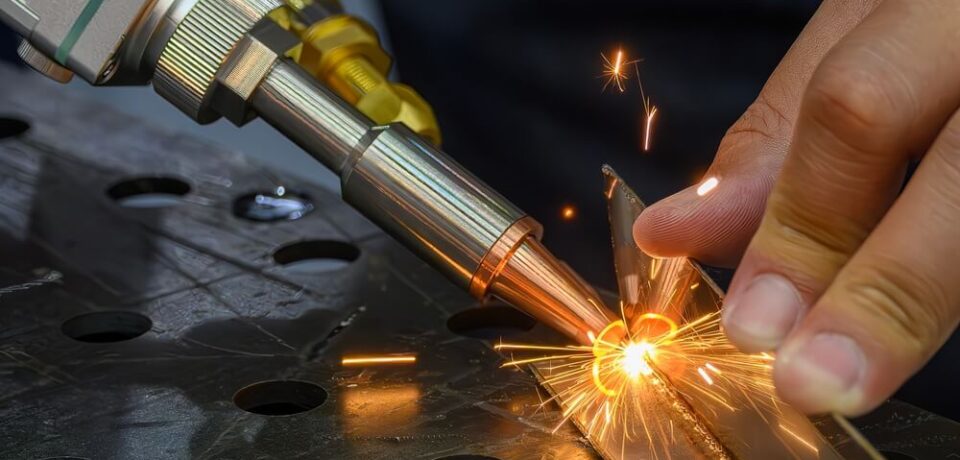
Walk into any metal fabrication or repair workshop today, and you’ll likely see fewer TIG and MIG welding setups than a few years ago — and more compact handheld laser welding machines. It’s not just a trend; it’s a genuine shift in how repair shops, fabricators, and maintenance teams across India are getting welding work done faster, cleaner, and with far less rework.
If you’re still deciding whether a handheld laser welding machine is worth the investment for your business, here’s a practical look at what it actually changes on the shop floor.
What Makes Handheld Laser Welding Different
Traditional welding methods rely on an arc and filler material to join metal, which generates significant heat and often leaves behind spatter, warping, and a rough finish that needs grinding or polishing afterward. A handheld laser welding machine focuses a concentrated laser beam on a very small area, which means:
- Much less heat spread into the surrounding metal — so thin sheets and delicate parts don’t warp
- Cleaner welds that often need little to no post-processing
- Faster work — laser welding is commonly several times quicker than TIG or MIG on the same job
- Easier learning curve — operators pick up the basics faster than they would with conventional arc welding
Where It Actually Helps in Day-to-Day Work
1. Repair and Maintenance Work
For workshops doing repair jobs — cracked machine frames, worn mould surfaces, damaged pipe fittings — a handheld laser welder lets technicians work directly on the part without dismantling it. The precision of the beam means you can seal a crack or rebuild a worn edge without damaging the surrounding material, which matters a lot when you’re repairing expensive tooling or equipment that can’t be easily replaced.
2. Sheet Metal Fabrication
For fabricators making enclosures, railings, signage, and custom metal products, the clean, low-distortion weld means less time spent grinding and finishing. That directly translates into faster turnaround on jobs and less material wasted on rework.
3. Small-Batch and Custom Jobs
If your business handles a lot of one-off or small-batch custom orders, the portability and quick setup of a handheld unit means you’re not losing time repositioning parts or re-fixturing for every job — a real advantage over fixed welding stations.
What to Check Before You Buy One
1. Power Rating for Your Material Thickness
- 1000–1500 W models handle thinner stainless steel and general sheet work well
- 2000–3000 W models are better suited to thicker plate and heavier industrial jobs
Buy for what you’ll actually be welding day to day — going overpowered adds cost without adding value if most of your work is thin gauge material.
2. Which Materials You Work With Most
Stainless steel, mild steel, aluminium, and galvanized sheet all respond differently to laser welding. If aluminium is a regular part of your work, confirm the machine is rated for reflective metals — cheaper units can struggle here.
3. Build Quality and Cooling
A stable laser source and a reliable cooling system are what keep weld quality consistent over long shifts, not just in the first few weeks of use. This is one area where it’s worth paying for a proven brand rather than the lowest quote.
4. Genuine Spares and Local Service
This is where a lot of buyers get caught out after the sale. Handheld welding machines have consumable parts — nozzles, protective lenses, welding wire feed components — that need periodic replacement. If your supplier can’t get genuine spares to you quickly, or doesn’t have a service team that understands the machine, downtime adds up fast.
5. Training and Support
A good handheld laser welder is easy to learn — but proper training still matters for getting consistent weld quality and keeping the machine running correctly. Look for a supplier who includes operator training and ongoing technical support, not just a machine delivery.
Handheld laser welding machines have moved from a “nice to have” to a practical, everyday tool for repair shops and fabricators who want faster turnaround, cleaner welds, and lower rework. The technology itself is fairly mature now — what separates a good purchase from a costly mistake is choosing the right power rating for your work, and a supplier who stands behind the machine with genuine parts and responsive service.
KG LaserTech supplies handheld laser welding machines built for Indian workshops, backed by genuine spare parts, installation support, and an AMC option to keep your machine running reliably. Talk to our team about the right model for your welding needs.
Why Your Laser Cutting Machine Is Losing Accuracy — And How to Fix It
- kgladmin
- August 14, 2026